Maruti Suzuki India Limited has achieved a major milestone in sustainable logistics by dispatching over 5.85 lakh vehicles via railways in calendar year 2025, marking an 18 per cent growth compared to CY 2024. Over the past decade, the company’s reliance on rail transport has grown sharply, with rail’s share in outbound logistics increasing from just 5.1 per cent in 2016 to nearly 26 per cent in 2025. This shift has played a key role in lowering carbon emissions, reducing fuel imports, and easing pressure on India’s road infrastructure.
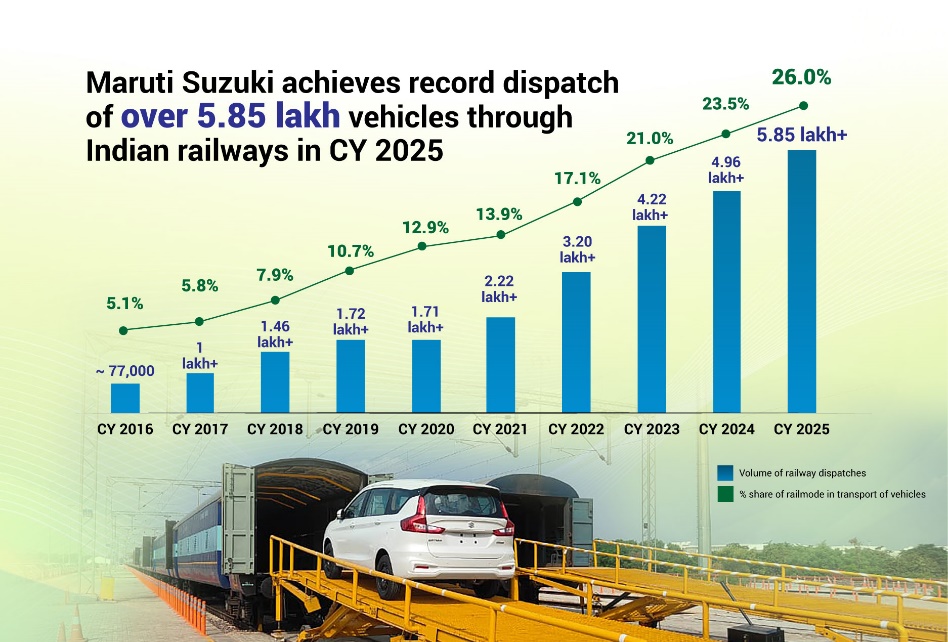
The automaker has been a pioneer in promoting rail-based vehicle transportation. Back in 2013, Maruti Suzuki became the first automobile manufacturer in India to secure an Automobile-Freight-Train-Operator (AFTO) licence. Since FY 2014–15, the company has transported over 28 lakh vehicles by rail from 22 origin points, servicing more than 600 cities across the country through a hub-and-spoke logistics model.
Currently, Maruti Suzuki operates more than 45 flexi-deck rakes, each capable of carrying around 260 vehicles per trip, ensuring efficient and high-volume movement. In CY 2025, dispatches from the company’s in-plant railway sidings at Gujarat and Manesar alone accounted for 53 per cent of its total rail-based vehicle movements.
ALSO READ: Suzuki Opens Second Biogas Plant in India to Boost CNG Fuel Supply
This continued push towards rail logistics underlines Maruti Suzuki’s long-term commitment to sustainability and operational efficiency across its supply chain.