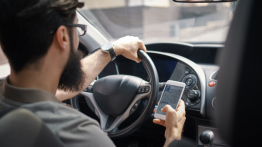
Think of the last time you got into your car. You most likely adjusted the seat, synced your phone, or asked the navigation system to find directions for you. However, one thing you definitely haven't considered is how every single one of those actions got documented.
The seating position you set, the numbers in your contact list, the address you entered, how you navigated the traffic lights – all of those aspects of your life get recorded. Modern cars are essentially computers that drive, and computers accumulate information.
Most people have an inkling that this is taking place. Very few actually know what types of information cars store, who gets to hold that information, and what measures they can take.
This article takes you through each step in great detail so that by the end, you will know for sure how your car handles data.
Your Car Is Constantly Taking Notes
Any contemporary model comes equipped with a plethora of sensors, cameras, microphones, a GPS chip, and a constant connection to the internet. All of this machinery doesn't rest while you operate the car. The telematics device, which is basically a modem that comes as a part of every car, collects and sends your data to the manufacturer's servers in regular intervals, sometimes every couple of seconds.
These are some examples of data that a modern car collects. It starts with something as obvious as your whereabouts and becomes much more intricate. Information on how fast you drive, how aggressively you press the pedal, what turns you made, and even if your eyes are on the road and your hands are holding the steering wheel can get collected. Your contacts, calling history, and even texts can get synchronized if you link your device to the car. Moreover, your seats and climate settings say quite a lot about the passengers.
Each of the data points above doesn't seem threatening on its own. Taken together for an extended period of time, however, they provide a rather vivid picture of your life. Where you live, where you go to work, whom you see during the weekend, what time you leave home, and even if you are a careful or aggressive driver. And that is what makes it so valuable – which means that none of it stays in the car forever.
Where the Data Goes Once It Leaves the Car
The first destination is, obviously, the car manufacturer's server. While they can use collected data for diagnosing problems with the car, maintaining safety systems, predicting maintenance issues, etc., it is the secondary use of it that raises concerns.
Secondary use of the data implies sharing it with third parties. According to the research conducted by Mozilla in 2023, manufacturer privacy policies were the worst of all products the organization has seen. Notably, they allow passing your information along to a rather diverse group of partners – data brokers, marketing agencies, fleet management providers, analytics, and even government agencies upon a mere request.
Moreover, the insurance sector must be mentioned specifically. Several manufacturers sent data regarding your driving habits – hard braking, quick acceleration, or late-night activities – to risk assessment companies, which in turn sold this information to insurance providers.
In January 2025, the FTC came to an agreement with General Motors and OnStar due to the fact that drivers noticed an increase in their monthly premiums and found out that the reason was data that they didn't even agree to collect in the first place. Regulators in California imposed fines on other manufacturers for opting customers out of the process of sharing data. Besides, the issue gained political traction in various states, and restrictions on location tracking have become a reality in Maryland and Oregon.
The In-Car Hotspot and Your Connected Devices
Besides being a data source, contemporary cars also serve as hot spots, providing you and your passengers with a stable connection. That might come in handy, although you have another aspect to worry about since all of that traffic passes through a mobile network, as usual.
If you use a built-in network for your laptop or smartphone regularly, then it would be reasonable to protect your identity the way you would if it were provided by a hotel. Most privacy-focused drivers purchase VPN service, which ensures the privacy of web browsing activity while using the car's network, no matter which provider the connection goes through. Thus, even if you are in the middle of an important task, the information doesn't get exposed.
The companion app, however, is the second data flow that requires your attention. Apps that are aimed at remote start or monitoring of the battery's condition require access to your smartphone's location, push notifications, and background activity. Disabling each of these permissions individually doesn't mean that you lose all the functionality.
Why Regulators Are Finally Paying Attention
While data protection in terms of websites and mobile applications was quite developed, data collection in vehicles went unnoticed until the very recent past. Starting in 2024, the FTC declared connected cars as a priority in its enforcement practices. It wasn't enough for manufacturers, though, who received a huge fine for driver's information misuse in 2025. Besides, the privacy regulatory agency in California started analyzing the automotive market and imposed sanctions in 2026 for creating additional hurdles for opting out of the process of data sharing. In addition, the state governments in Maryland and Oregon enacted restrictions on geolocation sharing.
Furthermore, outside of the USA, the privacy commissioner in Australia launched a significant investigation into automotive industry data collection, while some manufacturers in Europe faced GDPR violations due to recording in the cabin.
The trend is quite clear – lawmakers recognize data collected in connected cars as sensitive personal information comparable to medical and financial records. Still, law enforcement isn't quite efficient, so it is still largely up to you what data your car accumulates.
What You Can Actually Do About It
There is a variety of things you can do to protect your identity in the modern vehicle.
First of all, log in to your manufacturer's online platform (usually available through their companion apps) and opt out of the data sharing programs. You should pay specific attention to anything related to driver scoring or smart driver services.
Then, you should examine the permissions provided to your companion app and to the device connected to the infotainment system via Bluetooth. If you don't need certain features, disable contact and background location permissions. Thereby, all information stops being passed to the cloud.
Finally, before selling or returning your car, make a complete reset of the infotainment system and unlink your device from the online account so that the next owner can't have access to your stored locations and paired devices.
Besides the tips above, it is also important to familiarize yourself with the privacy section in the manual for your particular car. Different manufacturers have different rules – some of them require a court order before providing any data to governmental authorities, whereas others respond to mere requests, while some allow disabling the telemetry altogether, and others integrate it into such vital functions as accident notifications.
Last but not least, ask the dealer about the data-collecting programs your car uses. Sometimes, salespeople don't have the necessary knowledge, so you will help the industry by asking those kinds of questions.
The Road Ahead Belongs to Informed Drivers
There is no way your car would stop collecting information anytime soon. The sensors, telematics devices, and profit motive behind them are inevitable components of contemporary automotive engineering. Nevertheless, most of them provide drivers with extra safety.
The issue doesn't lie in the collection per se but in its secondary purpose, obscure consent agreements, and the lack of interest among customers to dig into it. However, it's never too late to make the first step and change that trend.
Take half an hour this week and try to find out how many ways there are for your vehicle to report information about you. Login into the manufacturer's website, configure your privacy settings, and examine the permissions your apps and car get from your device. And then inform everyone else who drives the same model.