Cars stopped being purely mechanical things a while ago. A modern vehicle runs on over 100 million lines of code — Boeing 787 manages with around 6.5 million, for comparison. Software now determines fuel efficiency, crash avoidance, charging speed, and whether your seat remembers your preferred angle. This article covers what's actually happening in automotive software right now: which technologies are in production, which ones are still stuck in demo rooms, and what's genuinely hard to solve.
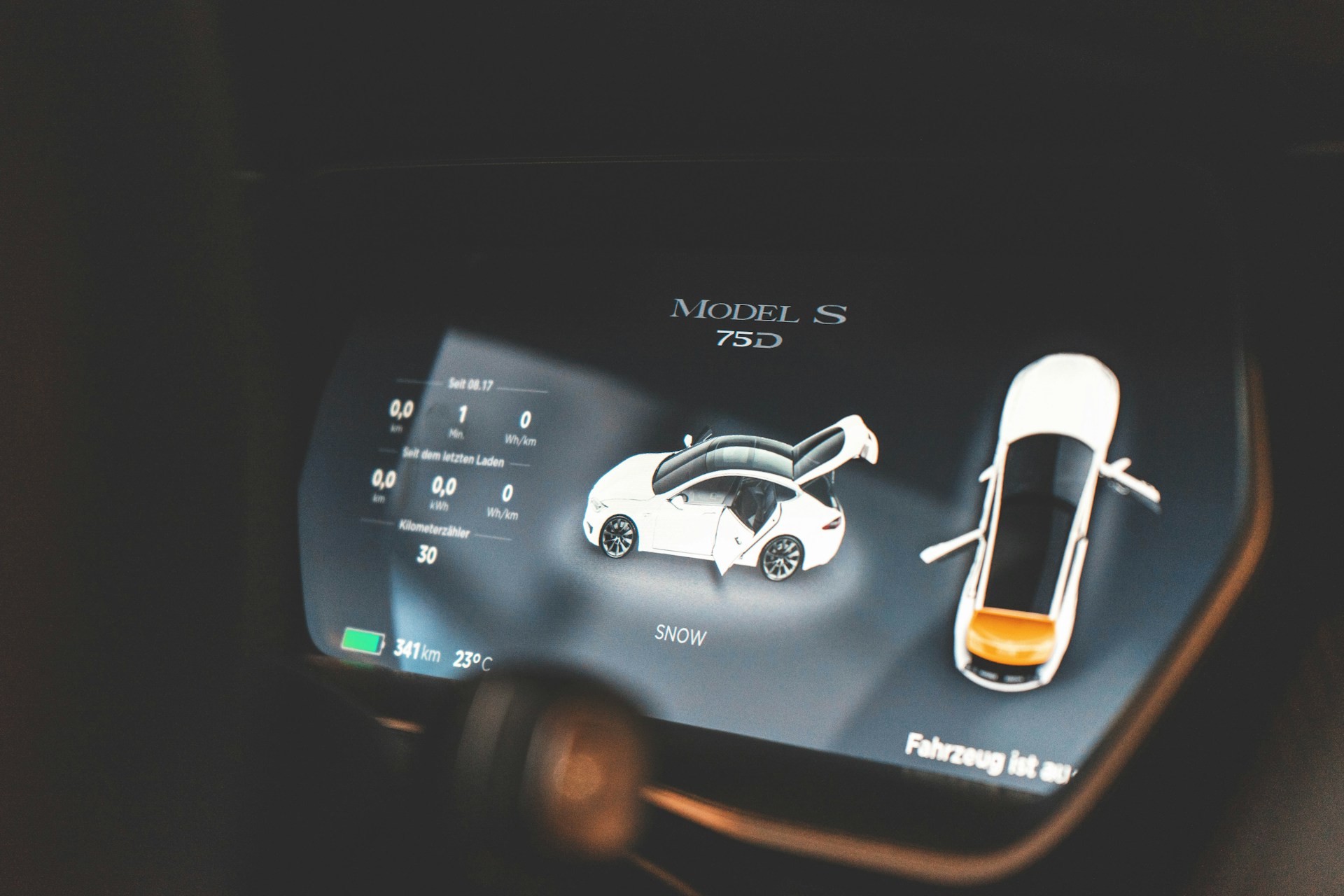
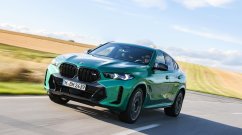
Photo by Marvin Meyer on Unsplash
The Market Is Moving — And Not Slowly
McKinsey puts the automotive software and electronics market at $462 billion by 2030. That number isn't a projection thrown around at conferences — it shows up in acquisition activity, ballooning R&D budgets, and the fact that software headcount at major OEMs has doubled in under five years.
Carmakers aren't used to operating like software companies. So external partners who understand both worlds have become genuinely valuable. Companies specialising in automotive software solutions — working across OEM supply chains, connected vehicle platforms, and back-end service infrastructure — are filling gaps that automakers simply can't close fast enough internally. Automotive software development has become the most expensive line item in vehicle programs at several OEMs. Ask anyone who worked on VW's CARIAD project.
CARIAD launched in 2020 with a clear goal: one unified software stack for every VW Group brand, from Škoda to Porsche. By 2023, the unit had burned through billions, delayed the Audi Q6 e-tron launch, and reshuffled leadership twice. The takeaway wasn't that in-house software is a bad strategy. It's that software development for automotive industry at real OEM scale is harder than it looks from the outside and automotive project timelines were built for a different era. Toyota, Stellantis, and Hyundai watched and recalibrated accordingly.
SDV: Everyone's Using the Acronym, Fewer Are Shipping the Product
Software-Defined Vehicle — SDV — is the framework reorganising how cars get designed, built, and updated post-sale. Instead of locking features into hardware at the factory, you build a software layer that can be updated wirelessly. Tesla proved this worked years ago: Drag Strip Mode on the Model 3, Autopilot behaviour improvements, battery range adjustments — all pushed over the air without touching the physical car. The rest of the industry is catching up, at wildly different speeds.
The core building blocks of an SDV architecture:
- Central compute platforms — replacing 80–150 scattered ECUs with 3–5 high-performance domain controllers
- AUTOSAR Adaptive — the standard enabling dynamic app loading and updates without hardware replacement
- SOME/IP and DDS middleware — handling communication between software components across vehicle domains
- Secure OTA pipelines — because a corrupted update pushing to 50,000 vehicles simultaneously is an unrecoverable PR event
- Hardware abstraction layers — so the same software can run on different processor architectures across model lines
NVIDIA's DRIVE platform is inside development programs at Mercedes, Volvo, and Jaguar Land Rover. Qualcomm's Snapdragon Ride is in BMW and Honda vehicles. These aren't chip licensing deals — they come with full software stacks and developer toolchains attached.
ADAS: Where the Stakes Get Real
Advanced Driver Assistance Systems are where vehicle software development gets expensive, slow, and genuinely high-stakes. A sensor fusion delay or camera misclassification isn't a UX problem — it's a potential fatality. The SAE levels most people have seen on spec sheets:
- Level 2 — simultaneous steering and throttle/brake control: Tesla Autopilot, GM Super Cruise, Ford BlueCruise
- Level 3 — driver can fully disengage in defined conditions: Mercedes Drive Pilot (California and Nevada, approved 2023), Honda Sensing Elite in Japan
- Level 4 — no driver needed within specific operational zones: Waymo One in San Francisco and Phoenix, Zoox in Las Vegas, Baidu Apollo Go in Wuhan
- Level 5 — full autonomy anywhere — doesn't exist commercially yet
Mercedes Drive Pilot is worth paying attention to. It became the first Level 3 system approved for US public roads — capped at 40 mph in mapped highway traffic jams. Sounds unimpressive until you understand what regulatory approval for a system where the driver bears no legal responsibility actually required. Lawyers spent as much time on that launch as engineers did.
Waymo is running around 700 robotaxis across San Francisco and Phoenix with no safety drivers. Over 20 million miles of fully autonomous operation logged. That's real operational data, not simulation hours — and it's pulling ahead of most competitors by a significant margin.
V2X: Almost Ready Since 2015
Vehicle-to-Everything communication has been "nearly deployed" for roughly a decade. The concept is solid: cars talking to traffic lights, other vehicles, road sensors — reducing accidents and cutting congestion in real time. The execution got delayed by a standards war nobody needed.
DSRC (backed by traditional automotive) versus C-V2X (Qualcomm and telecom operators) paralysed actual deployment for years. C-V2X won, largely because 5G infrastructure gave it a ready-made backbone.
What's actually live today:
- Audi Traffic Light Information — operating in select US cities, showing drivers the speed to catch the next green
- EU C-Roads project — V2X infrastructure deployed along major cross-border highways in Austria, Germany, France, and the Netherlands since 2019
- India's AIS-140 mandate — Vehicle Location Tracking for commercial and public transport fleets, building the connectivity layer that future V2X services will run on
The Genuinely Hard Parts
Cars Aren't Phones
A phone update fails and you restart the device. A braking system update fails and someone gets hurt. That difference explains most of the compliance overhead in automotive software — and why timelines in this industry look absurd compared to consumer tech.
The standards stack every automotive software team works against:
- ISO 26262 — functional safety, defining ASIL levels A through D (ASIL D covers the most safety-critical functions like braking and steering)
- ASPICE — Automotive SPICE, governing how the development process itself is structured and audited
- UNECE WP.29 / R155 — mandatory cybersecurity regulations for new type approvals in the EU, Japan, and South Korea
- ISO/SAE 21434 — cybersecurity engineering across the full vehicle lifecycle
- SOTIF (ISO 21448) — covering failures from system limitations, not just hardware faults
A feature that takes two weeks to code can take six months to certify. Not bureaucracy — just the cost of deploying software in safety-critical systems.
The ECU Debt Problem
Today's average vehicle carries between 80 and 150 ECUs from dozens of different suppliers, each running proprietary embedded software written across different decades. Getting that consolidated into a coherent, updatable architecture is genuinely messy — some of those software contracts can't be touched, some code hasn't had anyone who understands it for years.
Zonal architecture is the answer the industry settled on: organise compute by physical vehicle zone (front, rear, left, right) rather than by function, with fewer and more powerful nodes handling multiple domains. BMW's Neue Klasse platform launching in 2025 is built entirely on this model. VW's E3 1.2 architecture targets the same approach for Group vehicles from 2026.
Emerging Technologies Worth Watching
AI in Production Vehicles
Machine learning is already deployed across several vehicle software domains — not just autonomous driving:
- Predictive maintenance — Bosch's eCall and fleet platforms like Samsara use sensor data to flag component degradation before actual failure
- Driver Monitoring Systems — in-cabin cameras tracking eye movement and fatigue indicators, now part of Euro NCAP's 2023 rating criteria
- In-car voice assistants — Mercedes MBUX with ChatGPT integration launched in 2023 across the S-Class and EQ lineup; VW and Cupra followed using Cerence's CarLife with GPT-4
- AI-assisted code generation — tools generating AUTOSAR-compliant component templates, cutting the most repetitive parts of embedded software work
Digital Twins Cutting Development Time
A digital twin is a software replica of a physical system updated with real sensor data. For automotive programs, twins let engineers run software against a simulated vehicle environment months before physical prototypes exist. MathWorks Simulink has been the standard here for years, but ANSYS AVxcelerate, IPG CarMaker, and dSPACE SIMPHERA are now common in OEM validation pipelines.
BMW reported cutting hardware-in-the-loop testing time by up to 30% on electrified platform development using digital twin workflows. At the program cost levels involved, 30% matters.
Cybersecurity — The Recall Nobody Sees Coming
In 2015, researchers Charlie Miller and Chris Valasek remotely took control of a Jeep Cherokee over a cellular connection — adjusting climate controls, cutting the engine on a live highway. Chrysler recalled 1.4 million vehicles. The software patch cost under a million dollars. The reputational damage cost considerably more.
The threat categories that automotive security teams actually work on:
- OTA interception — man-in-the-middle attacks during wireless update delivery
- CAN bus injection — sending malicious commands across the internal vehicle network
- Telematics compromise — attacking cellular modems to gain remote vehicle access
- Supply chain insertion — malicious code introduced at tier-2 or tier-3 supplier level, invisible to the OEM until production
UNECE R155 requires a Cyber Security Management System for all new vehicle type approvals — no CSMS, no regulatory sign-off in the EU, Japan, or South Korea. Enforceable for all new vehicles from July 2024.
Where This Is Actually Running
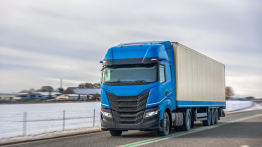
Fleet management was the early adopter story. Trucking operators and delivery fleets had direct ROI: route optimisation, maintenance alerts, driver behaviour scoring that cut insurance premiums. Tata Motors' FleetEdge platform and Ashok Leyland's iEGO system are deployed across commercial vehicle fleets, offering real-time diagnostics and geofencing through their own cloud infrastructure.
EV software is a distinct discipline. Battery Management Systems, thermal management, charging protocol negotiation across CCS, CHAdeMO, and the emerging NACS standard — all of this is specialised vehicle software development that shares very little with ICE vehicle programming. Rivian built their entire stack in-house, including a custom OS managing per-cell battery balancing and OTA updates. The R1T and R1S consistently get strong software reviews as a result. BYD handles everything in-house across Dynasty and Ocean series — their e-Platform 3.0 supports simultaneous OTA updates to powertrain, thermal, and infotainment. The Atto 3 and Seal carrying that platform in India include remote diagnostics managed through BYD's own infrastructure.
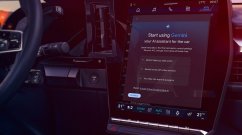
Infotainment is splitting into two camps. Google's Android Automotive OS — native on the head unit, not the phone-mirroring Android Auto — is now embedded in Volvo, Renault, Polestar, and Chevrolet vehicles. OEMs offload UI development costs and get Google Maps and Assistant baked in. The tradeoff: Google gets the driver relationship and in-vehicle data. BMW and Mercedes have both stayed on proprietary stacks for now, citing data ownership and brand differentiation. Whether that position survives the next five years is genuinely uncertain.
What's Coming
Vehicle software development converges on a few clear points over the next three to five years:
- Post-sale revenue through software — feature unlocks and subscriptions after purchase. BMW's heated seat subscription was badly received, but the model isn't disappearing
- Consolidated compute — NVIDIA's DRIVE Thor (2025 integrations) targets 2,000 TOPS in a single SoC, replacing what currently requires multiple separate processors
- Broader AI integration — monitoring and predicting across all vehicle systems, not just driving assistance
- Regulatory expansion — more markets adopting WP.29-equivalent frameworks; global compliance infrastructure becoming a baseline cost of doing business
The software experience is becoming an actual purchase factor. Nexon EV and Punch EV compete against Atto 3, Ioniq 5, and ZS EV — all carrying different OTA capabilities, connected service ecosystems, and update track records. Reviewers are benchmarking it. Buyers are asking about it. That's a shift from even three years ago.
Automotive software development isn't background infrastructure for the vehicle business anymore. It's the product. The compliance complexity is real, the talent shortage is real, and the investment required is significant. But the vehicles shipping in 2026 and beyond will look nothing like what was on roads five years ago and the difference will be written in code.