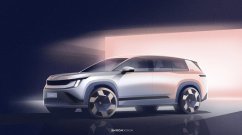
The Tata Vista EV, developed in International Automotive Research Centre at the University of Warwick Campus, Coventry, is a fully-electric 4-seater hatchback with impressive performance characteristics such as 110 miles range and a top speed of 71 mph.
The Vista EV was parked at the 2012 Auto Expo in Delhi demonstrating Tata Motors’ technological prowess. But, in case you missed it, here is a nicely edited video showing the features of the Vista EV.
The first 25 Tata Vista EV have been handed over to the owners as part of the final car evaluation before the UK launch. These specific owners will provide feedback to Tata Motors on a regular basis for a year. These cars are part-funded by the Coventry and Birmingham Low Emissions Demonstrators (CABLED).
The government has also established a public charging point network across the region. This trial will reveal the adaptability of the electric cars in UK.
The Vista EV will be made available to the general public by this summer. The vehicle will be assembled at the new factory in Coventry using kits imported from India.
Tata Motors is getting ready to the launch of an electric version of Indica Vista in the United Kingdom. The company has secured an electric vehicle manufacturing center in Coventry, which is capable of building 1,500 electric vehicles every year. The Vista EV was pioneered at Tata Motors UK subsidiary, Tata Motors European Technical Center Plc (TMETC). Tata Motors in a statement – With a top speed of 114 km [ Read More ]
International media is abuzz talking on the possible markets for the proposed Indica Vista EV. The company is ready with the product and is presently carrying out real world tests in Europe to see how the car copes with those conditions. German, French and Japanese companies have started arriving on the EV scene and Tata’s Vista EV will be among the first lot of new generation EVs in Britain to [ Read More ]
Recently, the British government revealed the list of 9 electric cars that are eligible to receive subsidies of up to £5,000 under a plan to promote low-carbon transport and the Vista EV made it to the list!
The idea is to promote electric vehicles by offering the cay buyers cash back of £5,000 towards the purchase of a low-carbon car from January 2011 to the end of March 2012. The government has promised to dole out £43 million until the end of March 2012 just to make sure that car buyers are attracted towards electric vehicles that are emission free.
The other vehicles on the list include Mitsubishi’s iMiEV, Daimler’s Smart fortwo electric drive, Peugeot’s iON, Citroen’s CZero, the Nissan Leaf, the Toyota Prius Plug-in, Vauxhall’s Ampera and General Motors’ Chevrolet Volt.
To go one step further, the UK government is also investing 20 million pounds to set up local charging points for 5 regions – the Midlands, Greater Manchester, East England, Scotland and Northern Ireland.
Pretty soon, one more name will be added to the club of “Green Cars”, our very own Indica Vista. Mind you this is a very exclusive club consisting of G-Wiz, Chevy Volt, Tesla roadster, Nissan Leaf and Mitsubishi’s i MIEV.
Tata showcased the prototype of the Vista EV at London Future Car Challenge along side 60 other vehicles from different manufacturers and swept the show completely by winning the 2 main awards:
• The Most Economic Small Passenger EV
• The Most Economical & Environment Friendly Small Passenger EV.
Buoyed by this success, Tata motors is completing the work on the Prototype and gearing it for an official launch.
The EV is a result of a collaboration with Miljo Grenland Innovation of Norway, a company which specializes in the development of innovative solutions for electric vehicles. Essentially, this Indica Vista EV runs on super polymer lithium ion batteries that provide it a range of approximately 160 miles.
The car will be made in the UK and for that the company has also applied for GBP 10 million loan under the UK Government’s Automotive Assistance Program. However, no launch date has been confirmed.
Though a very critical product, there has been very little coverage on the Tata Indica Vista EV by the Indian media. Now we bring you some important news about the Indica Vista EV, which should help you understand more about the product.
The Indica Vista EV’s electrical components were designed by Miljø Grenland / Innovasjon in conjunction with Tata engineers. Externally there is no telling apart the petrol/diesel variants and the electric version of the Vista. The ‘engine bay’ of the Vista EV contains a 55kW (75 hp) electric motor coupled to a transmission. The car is capable of reaching top speeds of up to 128kmph and the 0-60kmph dash takes only 9 seconds.
The Indica Vista EV weighs about 1350 kilos of which 250 kilos are contributed by the lithium-ion batteries. The Indica Vista EV has a range of about 200kms on a single charge which is an extremely decent figure and also comes with air-conditioning, power steering and power windows.
Tata’s Indica Vista EV (Electric Vehicle) will be available to customers in India in 2011, reports Rediff. Brands like GM and REVA have plans to boost production and market EVs aggressively.
The Indica Vista EV will also be exported to European countries where there is adequate facilities for charging. India’s yet to install a proper facility and we have heard many times in the past that companies are working with the government to make it happen.
India’s not yet seen a proper electric car. The REVA can only seat two adults comfortably and is cramped for tall people. It doesn’t have decent luggage space or features found on petroleum powered automobiles. The Tata Indica Vista or Chevrolet Spark EV with electric powertrain can offer the comfort and convenience that they otherwise offer, and still cost less to run.
The Indica Vista EV was showcased at the Delhi Auto expo last month and will be available at dealer showrooms in 2011. The Tata Indica Vista Electric could cost between Rs 600,000-700,000 bracket, not bad for a large hatchback that costs a fraction to run, is silent but comes with extra torque.
Tata could try handing out a hundred EVs to its Indica Vista diesel/petrol customers on a trial basis. Their feedback could be very valuable as they can point out where exactly the cars lags behind in real world conditions. The company can use this information to make changes to the product or understand where the improvements can be carried out. This is a better process than selling them, receiving feedback, and then making changes.