Fast Facts: Antilock Braking System (ABS)

Antilock braking system ABS

1. Antilock Braking Systems (ABS) are safety devices which prevent wheel lockup during braking and ensure that the wheel is tractable even while braking and hence ensuring the steeribility and stability of the vehicle.

2. The Antilock Braking System typically applies brakes and releases it at the rate of 25 times per second. This could cause a pulsating brake pedal which is perfectly normal. ABS improves vehicle control and decreases braking distances in wet and slippery conditions.

3. ABS consists of 4 wheel speed sensors, a Hydraulic modulator and an ECU. The system works continuously monitoring the wheel speeds at all times and in case it detects a slip (if one wheel rotates faster than the other three) the modulator applies brakes to that wheel till it stops slipping. Electronic Brakeforce Distribution (EBD) and Electronic Stability Control (ESC) programs are extensions of the ABS, with the latter requiring 2 additional sensors, a steering wheel angle sensor and a yaw-rate sensor.

4. Just because a car is equipped with ABS, one cannot drive aggressively testing the limits of the car. The ABS system actually does not increase the handling characteristics of the car, it just makes the car easier to control and safer to maneuver under heavy braking.

5. The first bike to come with an Anti-lock braking system was a BMW K100 in 1988. The bike came with a electronically controlled hydraulic ABS system.

The importance of ABS has made many countries in America and Europe to make ABS a mandatory feature on all cars. Developing countries like India could also bring these regulations in the distant future.

Volkswagen Polo India

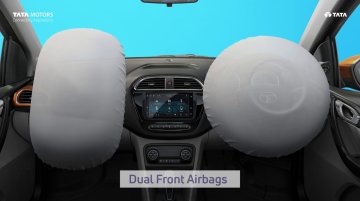
Volkwagen’s Brazilian arm would soon make airbags and ABS standard throughout its range. The latest entrant to the VW family, the Polo would come with airbags and ABS standard even in its Base variant. Base variants of the VW Cross Fox and Golf would also get these as standard.

However for India, the base variant Trendline does not come with airbags and ABS. Not only VW India, all the major players in the volume market do not offer airbags on the Base and Middle variants. Only few manufacturers offer Airbags and ABS on the top-end variants, while some offer them only as options.

The reason for this is that there are no strict guidelines set by the Indian Transport Authorities on standardized safety equipment in cars. The Brazilian government is taking strict measures to ensure the safety of vehicles sold in their country and they have fixed a deadline of 2014 for all carmakers to offer airbags and ABS as standard in all cars.

We would really wish to see such regulations in India so that carmakers do not take the Indian car buyer lightly and should move from offering ‘value for money’ products to offering safe, quality motoring to the Indians.

The Nissan Micra which is to be launched on July 14, has a driver side airbag standard, even on its base variant. This would go down the Indian history as the first small car to offer airbags as standard on the base variant.

We wish VW India would at least be offering airbags and ABS as standard even in the base variants of the VW Polo Sedan (Vento) which could be launched during Diwali.

IAB Exclusive: 2010 Mercedes Benz E-Class Gallery

The 2010 Mercedes Benz E-Class is Mercedes’ next and most talked about car. It is to be unveiled at the Geneva Motor Show this year and the original plan was to display the car to the public for the first time in Geneva lacking any camouflage, before going on sale later this year as a 2010 model. IAB now has exclusive images of the soon to be launched E-Class.